George Foreman Grill Instructions & Cooking Times: A Comprehensive Guide
Discover effortless cooking with your George Foreman Grill! This guide provides essential instructions, precise cooking times, and temperature settings for delicious results,
ensuring perfectly grilled meals every time.
The George Foreman Grill, a kitchen staple since the 1990s, revolutionized home cooking with its promise of quick, healthy, and convenient meals. Originally endorsed by boxing legend George Foreman, the grill quickly became a cultural icon, known for its ability to remove excess fat during the cooking process.
This innovative appliance utilizes a sloped grilling surface and a hinged lid, allowing fat to drain away from the food, resulting in leaner and healthier dishes. Beyond its health benefits, the George Foreman Grill is celebrated for its speed and ease of use, making it ideal for busy weeknights or quick lunches.
Over the years, the grill has evolved with various models offering features like adjustable temperature controls and removable plates for easy cleaning. This comprehensive guide will delve into the specifics of using your George Foreman Grill, providing detailed instructions and cooking times to help you achieve perfectly grilled results every time. From juicy steaks to tender chicken, unlock the full potential of this versatile kitchen appliance!
Understanding Grill Settings: Temperature Control
Mastering temperature control is crucial for optimal grilling with your George Foreman Grill. Many models feature variable temperature settings, typically ranging from Low to High, often indicated as 350°F, 375°F, and 400°F respectively. Understanding these settings allows you to tailor the cooking process to different food types and desired levels of doneness.
Higher temperatures (400°F) are ideal for searing meats quickly, creating a flavorful crust while locking in juices. Medium settings (375°F) are versatile, suitable for chicken, fish, and vegetables. Lower temperatures (350°F) are best for delicate foods or when you need a slower, more even cook.
Digital models often provide precise temperature adjustments and pre-programmed settings for specific foods. Always refer to your grill’s manual for specific temperature recommendations. Experimenting with these settings will help you achieve consistently delicious results, ensuring your food is cooked to perfection every time.
Preheating the Grill: Essential First Steps
Proper preheating is paramount for achieving consistent cooking results with your George Foreman Grill. Allow the grill to heat up for at least five to ten minutes before adding food. This ensures the grilling surfaces reach the desired temperature, promoting even cooking and preventing food from sticking.
Most grills have an indicator light that signals when preheating is complete. If your model lacks a light, a simple test is to lightly sprinkle a few drops of water onto the grill surface; if they sizzle and evaporate quickly, the grill is ready.
Preheating also helps to sanitize the grill plates, reducing the risk of bacterial contamination. A thoroughly preheated grill will sear food effectively, creating those desirable grill marks and enhancing flavor. Don’t rush this step – patience yields perfectly grilled meals!
General Safety Instructions & Grill Maintenance
Always prioritize safety when operating your George Foreman Grill. Never immerse the grill base in water or other liquids to prevent electric shock. Ensure the grill is unplugged before cleaning or performing any maintenance. Allow the grill to cool completely before handling.
Regular cleaning is crucial for maintaining optimal performance and hygiene. After each use, wipe down the grill plates with a damp cloth or sponge. For stubborn residue, use a grill scraper or a mild dish soap solution. Avoid abrasive cleaners, as they can damage the non-stick coating.
Periodically check the drip tray and empty it to prevent grease buildup, which can cause smoke and potential fire hazards. Proper maintenance extends the life of your grill and ensures consistently delicious, safe meals.
Cooking Chart for Beef (Thickness & Weight Considerations)
Achieving your desired level of doneness with beef on a George Foreman Grill depends heavily on thickness and weight. For steaks approximately ½ inch thick and weighing 6-8 ounces each, aim for 6-8 minutes for medium-rare (145°F) and 7-8 minutes for medium (160°F).
Adjust cooking times for thicker cuts. A 1-inch steak of similar weight will require approximately 8-9 minutes for medium-rare and 8-9 minutes for medium. Remember these are estimates; internal temperature is key.
Always use a meat thermometer to verify doneness. Thinner cuts (under ½ inch) cook rapidly – around 2-3 minutes may suffice. Larger, heavier steaks will naturally need longer grilling times. Consistent results come with practice and careful monitoring.
Rare, Medium-Rare, Medium & Well-Done Beef Times
Rare, Medium-Rare, Medium & Well-Done Beef Times
Grilling beef to perfection requires understanding time correlations with desired doneness. For a ½-inch steak, rare takes roughly 5-6 minutes, while medium-rare requires 6-8 minutes. Achieving a medium doneness necessitates 7-8 minutes of grilling time, ensuring a pink center.
For those preferring well-done beef, extend the grilling time to 9-10 minutes. These times are based on a 6-8 ounce steak; adjust accordingly for weight variations. Remember, the George Foreman Grill cooks quickly, so frequent checks are crucial.
Utilize a meat thermometer for precise results. Rare is 125-135°F, medium-rare is 135-145°F, medium is 145-155°F, and well-done exceeds 160°F. Consistent monitoring guarantees a flavorful and safely cooked steak every time.
Cooking Chart for Poultry (Chicken & Turkey)
Achieving perfectly cooked poultry on your George Foreman Grill is straightforward with these guidelines. Chicken breasts, approximately 6-8 ounces, require 6-8 minutes for thorough cooking, ensuring they reach an internal temperature of 165°F. Thighs, being denser, benefit from a slightly longer cook time of 8-10 minutes.
Turkey, whether ground or cutlets, demands careful attention. Ground turkey should be grilled for 5-7 minutes, while cutlets need around 6-8 minutes. Always verify the internal temperature with a meat thermometer to guarantee safety and prevent undercooking.
Remember that thicker cuts will necessitate extended grilling times. Consistent monitoring and proper temperature checks are vital for juicy, flavorful, and safely prepared poultry dishes. Enjoy healthy and delicious meals with ease!
Chicken Breast & Thigh Cooking Times
Chicken Breast & Thigh Cooking Times
For consistently juicy chicken, understanding precise cooking times is key. Boneless, skinless chicken breasts, averaging 6-8 ounces, typically require 6-8 minutes on the George Foreman Grill, achieving a safe internal temperature of 165°F. Adjust time slightly based on thickness; thinner breasts cook faster.
Chicken thighs, with their higher fat content, benefit from a slightly extended grilling period. Expect 8-10 minutes for bone-in, skin-on thighs, and 6-8 minutes for boneless, skinless varieties. Marinating beforehand enhances flavor and tenderness.
Always use a meat thermometer to confirm doneness, ensuring a safe and delicious meal. Remember, these times are estimates; individual grills may vary. Consistent monitoring guarantees perfectly cooked chicken every time!
Cooking Chart for Pork (Chops & Tenderloin)
Achieving succulent pork on your George Foreman Grill requires understanding cut thickness and desired doneness. Pork chops, approximately 1-inch thick and weighing 6-8 ounces, generally need 8-9 minutes for medium doneness (160°F). Thinner chops (½ inch) will cook in just 6-7 minutes.
Pork tenderloin, a leaner cut, benefits from slightly shorter cooking times. A 1-inch thick tenderloin requires around 7-8 minutes, while a ½-inch slice cooks in 4-5 minutes. Marinating tenderloin beforehand is highly recommended for added moisture and flavor.
Remember to always verify the internal temperature with a meat thermometer. Overcooking pork can lead to dryness, so careful monitoring is crucial. Adjust times based on your grill’s specific performance and personal preference.
Pork Chop Thickness & Corresponding Times
Pork Chop Thickness & Corresponding Times
Precise cooking times for pork chops on a George Foreman Grill are directly linked to their thickness. For ½-inch thick chops, weighing around 6-8 ounces each, a cooking time of 6-7 minutes typically yields a perfectly cooked result. Ensure even cooking by avoiding overcrowding the grill.
Conversely, 1-inch thick pork chops, also in the 6-8 ounce range, require a slightly longer cooking duration of 8-9 minutes to reach a safe internal temperature and desirable level of doneness. Utilizing a meat thermometer is highly recommended for accuracy.
These times are guidelines; variations may occur based on individual grill performance. Always check the internal temperature to guarantee the pork reaches 145°F (medium) for optimal flavor and safety.
Cooking Fish & Seafood on the George Foreman Grill
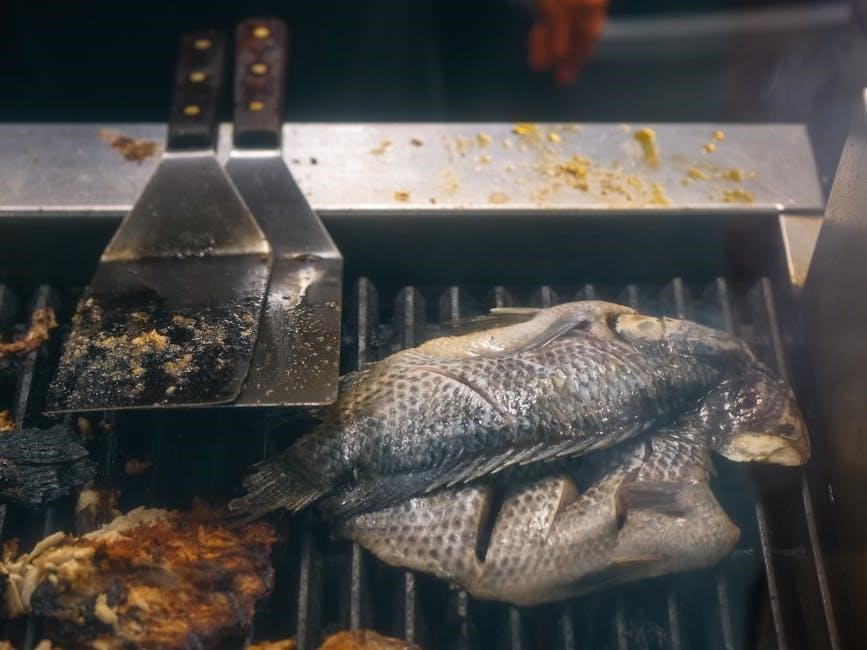
Grilling fish and seafood on a George Foreman Grill is remarkably quick and easy, delivering flaky, flavorful results. Delicate fish like tilapia benefit from a shorter cooking time – approximately 2-3 minutes per side, utilizing a medium temperature setting (375°F). This prevents overcooking and maintains moisture.
For heartier options such as salmon, a cooking time of 3-4 minutes per side at the same medium temperature is generally sufficient. Shrimp, being even quicker to cook, require only 1-2 minutes per side, ensuring they remain tender and succulent.
To prevent sticking, lightly oil the grill plates before adding the seafood. Monitoring closely is crucial, as fish cooks rapidly. A finished internal temperature of 145°F is recommended for most seafood varieties.
Salmon, Tilapia & Shrimp Cooking Guidelines
Salmon, Tilapia & Shrimp Cooking Guidelines
Achieving perfectly cooked seafood on your George Foreman Grill hinges on understanding individual cooking times. For delicate tilapia fillets (approximately 6-8oz, ½ inch thick), preheat the grill to medium (375°F) and grill for 3-4 minutes per side. This yields a flaky, moist texture.
Salmon, with its richer flavor, requires a similar approach. Grill 6-8oz salmon fillets at medium (375°F) for approximately 4-5 minutes per side, aiming for an internal temperature of 145°F. A light coating of oil prevents sticking.
Shrimp cooks incredibly fast! Use medium heat and grill for just 2-3 minutes total – 1-1.5 minutes per side – to avoid rubbery shrimp. Ensure even cooking by arranging shrimp in a single layer. Consistent monitoring is key for optimal results.
Vegetable Grilling Times & Techniques
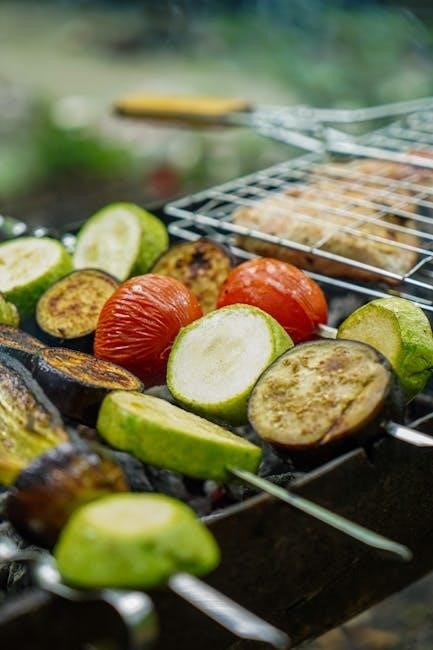
Grilling vegetables on your George Foreman Grill unlocks incredible flavor and texture. For zucchini and peppers (sliced approximately ¼ inch thick), preheat the grill to medium-high (400°F) and grill for 3-5 minutes total, flipping halfway through. A light brush of olive oil prevents sticking and enhances caramelization.
Onions, cut into ½ inch slices, benefit from a slightly longer cooking time. Grill at medium-high (400°F) for 5-7 minutes, ensuring they become tender and slightly charred. Consistent flipping is crucial for even cooking.
Consider the density of the vegetable; denser options like carrots may require a lower temperature and longer grilling duration. Lightly seasoning with herbs and spices before grilling elevates the flavor profile. Remember to monitor closely to prevent burning!
Optimal Times for Zucchini, Peppers & Onions
Optimal Times for Zucchini, Peppers & Onions
Achieving perfectly grilled vegetables hinges on precise timing. For zucchini, sliced to ¼ inch thickness, a medium-high heat (400°F) yields optimal results in just 3-5 minutes, flipping once for even grill marks. Bell peppers, similarly sliced, require the same timeframe, developing a delightful char.
Onions, cut into ½ inch slices, demand a slightly extended grilling period. Maintain the medium-high heat (400°F) and grill for 5-7 minutes, flipping frequently to ensure tenderness and prevent burning. A light coating of olive oil is recommended for all vegetables.
Experiment with seasoning! A sprinkle of garlic powder or Italian herbs enhances the natural sweetness of these vegetables. Consistent monitoring is key to preventing overcooking and maximizing flavor.
Grill Time Variations Based on Food Thickness
Food thickness dramatically impacts grilling duration on a George Foreman Grill. A ½ inch cut, like a thinner steak or chicken breast, requires significantly less time than a 1-inch counterpart. For instance, a ½ inch steak at medium-rare (145°F) might cook in 6-8 minutes, while a 1-inch steak needs 8-10 minutes.
Consistent internal temperature checks are crucial. Thinner cuts reach desired doneness faster, risking dryness if overcooked. Conversely, thicker cuts need ample time to cook through without burning the exterior.
Adjust grilling time accordingly, adding approximately 2-4 minutes per additional ½ inch of thickness. Utilizing the grill’s variable temperature settings can further refine the process, ensuring even cooking throughout the food.
1/2 Inch vs. 1 Inch Thick Cuts
Comparing ½ inch and 1-inch cuts on a George Foreman Grill reveals substantial cooking time differences. A ½-inch chicken breast might finish in 6-7 minutes, achieving a safe internal temperature, while a 1-inch breast demands 8-9 minutes. Beef follows a similar pattern; thinner steaks cook faster, reducing the risk of drying out.
The increased mass of a 1-inch cut requires more heat penetration to reach the desired doneness. This necessitates longer grilling times or a slightly lower temperature setting to prevent a charred exterior and undercooked interior.
Always prioritize internal temperature over time. Use a meat thermometer to confirm doneness, adjusting cooking time based on the specific cut and your preferred level of doneness.
Using the Variable Temperature Settings (High, Medium, Low)
Leveraging the variable temperature settings on your George Foreman Grill unlocks culinary versatility. High (400°F) is ideal for searing steaks quickly, creating a flavorful crust, and cooking thinner cuts of meat or seafood. It’s also excellent for achieving crispy results with vegetables.
Medium (375°F) provides a balanced approach, suitable for chicken breasts, pork chops, and thicker fish fillets. This setting allows food to cook through without burning.
Low (350°F) is best for delicate items like salmon, shrimp, or vegetables that require gentle cooking. It prevents overcooking and maintains moisture. Experimenting with these settings allows you to tailor cooking times to specific foods, ensuring optimal results every time.
400°F, 375°F & 350°F Applications
Utilizing the 400°F setting on your George Foreman Grill is perfect for rapid searing – think thin steaks (around ½ inch) achieving a beautiful crust in minutes. It’s also fantastic for quick-cooking items like shrimp or delicate fish fillets, ensuring a crispy exterior. Remember to monitor closely to prevent burning.
At 375°F, the grill excels with chicken breasts and pork chops (¾ to 1 inch thick). This temperature allows for thorough cooking without drying out the meat, resulting in juicy and flavorful results. It’s a versatile setting for everyday meals.
Finally, 350°F is your go-to for more delicate foods like salmon or vegetables. This lower temperature prevents overcooking and preserves moisture, yielding tender and perfectly cooked dishes. Adjust cooking times accordingly for optimal outcomes.
Troubleshooting Common Grilling Issues
Experiencing uneven cooking? Ensure food is placed evenly across the grill surface and avoid overcrowding. For thicker cuts, consider slightly increasing cooking time or using a lower temperature setting initially to promote even heat distribution.
If food is sticking, verify the grill plates are properly seasoned. A light coating of cooking spray can also help prevent sticking, but avoid excessive amounts. Ensure the grill is preheated sufficiently before adding food.
Smoke during grilling is often caused by fat rendering. This is normal, but excessive smoke could indicate overly fatty foods or food debris on the grill plates. Regularly clean the grill to minimize smoke production. Always ensure adequate ventilation.
If the grill isn’t heating, check the power cord and outlet. Contact customer support if the issue persists.
Cleaning and Storage of Your George Foreman Grill
Maintaining your George Foreman Grill is crucial for longevity and optimal performance. Always unplug the grill and allow it to cool completely before cleaning. Removable plates are typically dishwasher-safe, offering convenient cleaning. For stubborn residue, a non-abrasive sponge or cloth with warm, soapy water works effectively.
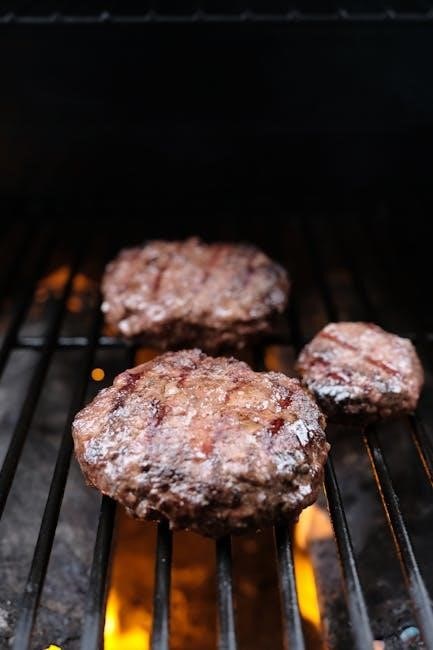
Avoid using harsh chemicals or scouring pads, as these can damage the non-stick coating. Wipe down the exterior with a damp cloth. Ensure all parts are thoroughly dry before reassembling.
For storage, clean the grill completely and store it in a cool, dry place. Consider storing it with the plates locked to protect the heating elements. Proper storage prevents dust accumulation and ensures it’s ready for your next grilling session. Regular cleaning extends the grill’s lifespan.
Advanced Techniques: Marinades & Seasoning
Elevate your grilling experience with marinades and seasonings! Marinades not only impart flavor but also tenderize meats, resulting in juicier, more flavorful results on your George Foreman Grill. Acidic marinades, like those with citrus or vinegar, are particularly effective.
For optimal flavor penetration, marinate meats for at least 30 minutes, or even overnight in the refrigerator. Seasonings, such as herbs, spices, and rubs, add another layer of complexity. Apply seasonings liberally before grilling, ensuring even coverage.
Remember that the grill’s heat can intensify flavors, so adjust seasoning accordingly. Experiment with different combinations to discover your favorites! Consider using oil-based marinades to prevent sticking. Proper seasoning and marinating unlock the full potential of your grilled creations.